Natural Ingredients vs Chemical Ingredients: What Should You Look for in Oral Care?

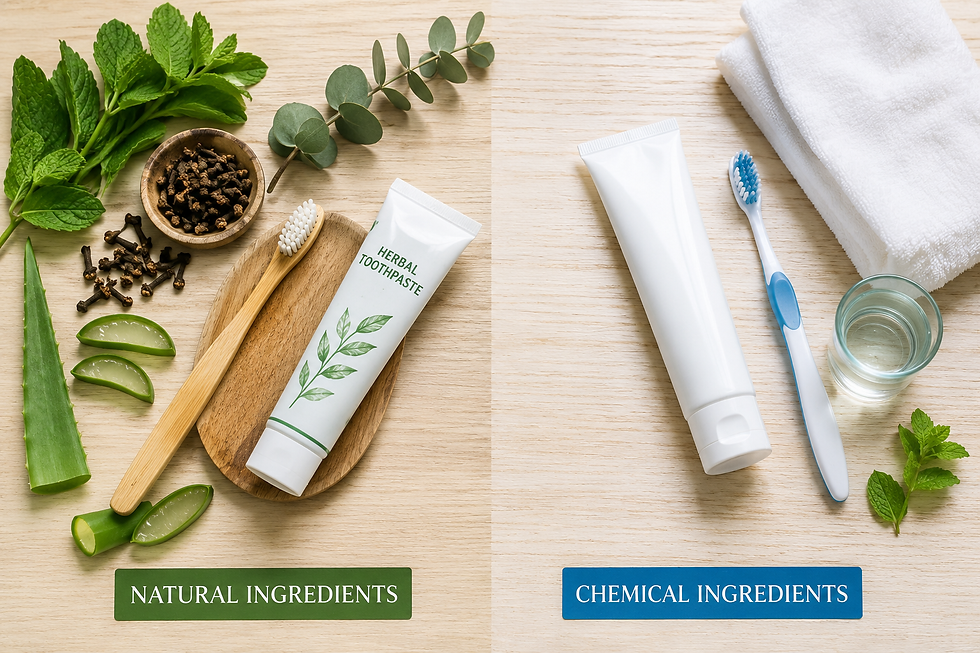
When choosing an oral care product, most people focus on promises such as whiter teeth or fresher breath. However, the ingredient list often provides a better picture of what a product contains and how it fits into your daily routine.
Natural and synthetic ingredients can both play a role in oral care, but understanding the differences helps consumers make more informed decisions based on their own preferences and oral health goals.
Why More People Read Ingredient Labels
Consumers today pay closer attention to ingredient labels than they did a decade ago. Growing interest in natural wellness has encouraged many people to understand exactly what they use every day.
Instead of simply selecting the most familiar brand, many now compare:
Plant-based ingredients
Artificial additives
Preservatives
Flavoring agents
Essential oils
Cleaning agents
This shift reflects a desire for greater transparency rather than following marketing claims alone.
What Are Natural Ingredients?
Natural ingredients typically originate from plants, minerals, or naturally occurring substances. Many have a long history of traditional use in personal care products.
Examples commonly found in oral care include:
Peppermint oil
Spearmint
Myrrh
Aloe vera
Tea tree oil
Clove oil
Eucalyptus
Xylitol
Baking soda
These ingredients are often selected because they contribute cleansing, refreshing, or soothing properties while supporting a balanced daily oral care routine.
If you're interested in learning more about the botanical components used in one natural oral care formula, explore the complete guide to Dental Pro 7 Ingredients

Understanding Chemical Ingredients
The word "chemical" often creates confusion.
In reality, everything—including water and plant extracts—is made of chemicals. The important distinction is not whether an ingredient is a chemical, but what purpose it serves and whether it has been appropriately formulated for its intended use.
Many conventional oral care products may include ingredients such as:
Fluoride
Synthetic flavorings
Artificial colors
Preservatives
Foaming agents
Stabilizers
These ingredients help improve shelf life, texture, flavor, or cleaning performance depending on the formulation.
Rather than viewing natural and conventional products as opposites, many consumers simply prefer formulations with ingredient lists they find easier to understand.
Transparency Matters More Than Marketing
One of today's biggest consumer trends is ingredient transparency.
People increasingly ask questions such as:
Why is this ingredient included?
Is it plant-based?
Does it have a traditional history of use?
Is it necessary for the formulation?
Does the manufacturer clearly explain its purpose?
Manufacturers that provide detailed ingredient information often help consumers make more confident purchasing decisions.
Choosing the Right Product for Your Needs
No single oral care product works best for everyone.
Some people prioritize:
Botanical ingredients
Fluoride-free formulations
Minimal additives
Fresh breath
Gum care
Sensitive teeth
Others may prefer conventional products recommended by their dental professional.
The best choice depends on individual needs, personal preferences, and guidance from a qualified dental practitioner.
Comparing Value Alongside Ingredients
Ingredients are only one part of the buying decision.
Many consumers also compare:
Package size
Daily cost
Money-back guarantee
Shipping options
Available bundles
Evaluating both ingredient quality and overall value helps buyers make a more informed purchase.
For readers comparing package options and current offers, this updated Dental Pro 7 Price Guide provides a helpful overview.
Building a Healthy Daily Routine
Regardless of the product you choose, healthy oral habits remain the foundation of long-term oral wellness.
A complete routine generally includes:
Brushing twice daily
Flossing every day
Drinking enough water
Limiting sugary foods and drinks
Scheduling regular dental checkups
Selecting oral care products with ingredients you understand
Products work best when they complement consistent daily habits rather than replace them.
Final Thoughts
Choosing between natural and conventional oral care products does not have to be an all-or-nothing decision. Understanding ingredient labels, comparing product formulations, and considering overall value allow consumers to make choices that suit their personal preferences and oral health goals.
Whether you prefer botanical ingredients or more traditional formulations, informed decisions begin with understanding what goes into the products you use every day.



Comments